I have spent most of my career trying to give experts superpowers with AI. Teachers, miners, engineers, it was always the same problem: how do I capture what only this person knows so that AI can be useful.
Recently, I talked with a construction company with thousands of workers that taught AI to their people. They vibe coded their own tools to handle the paperwork required before starting a repair. They saved hours, and the workers spent that time doing what only they can do: fixing the actual bolt.
Two kinds of knowledge
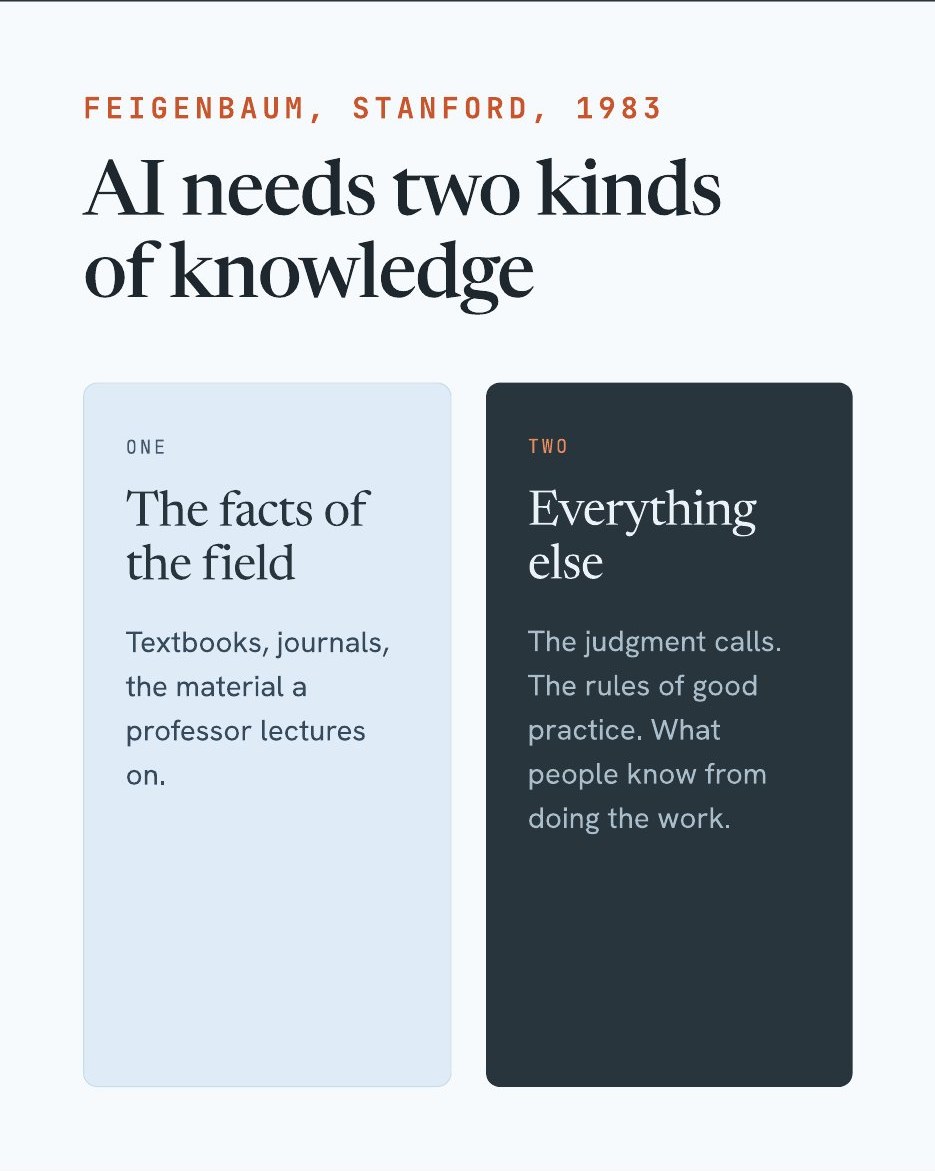
I found an explanation in a 1983 article by Stanford professor Edward Feigenbaum. He defined two types of knowledge AI needs to learn to empower expert workers.
The first is the facts of the field. Textbooks, journals, what a professor lectures on. The second is everything else. The judgment calls, the rules of good practice, the things people know from doing the work.
That split is still the most useful map I know for putting AI inside a company.
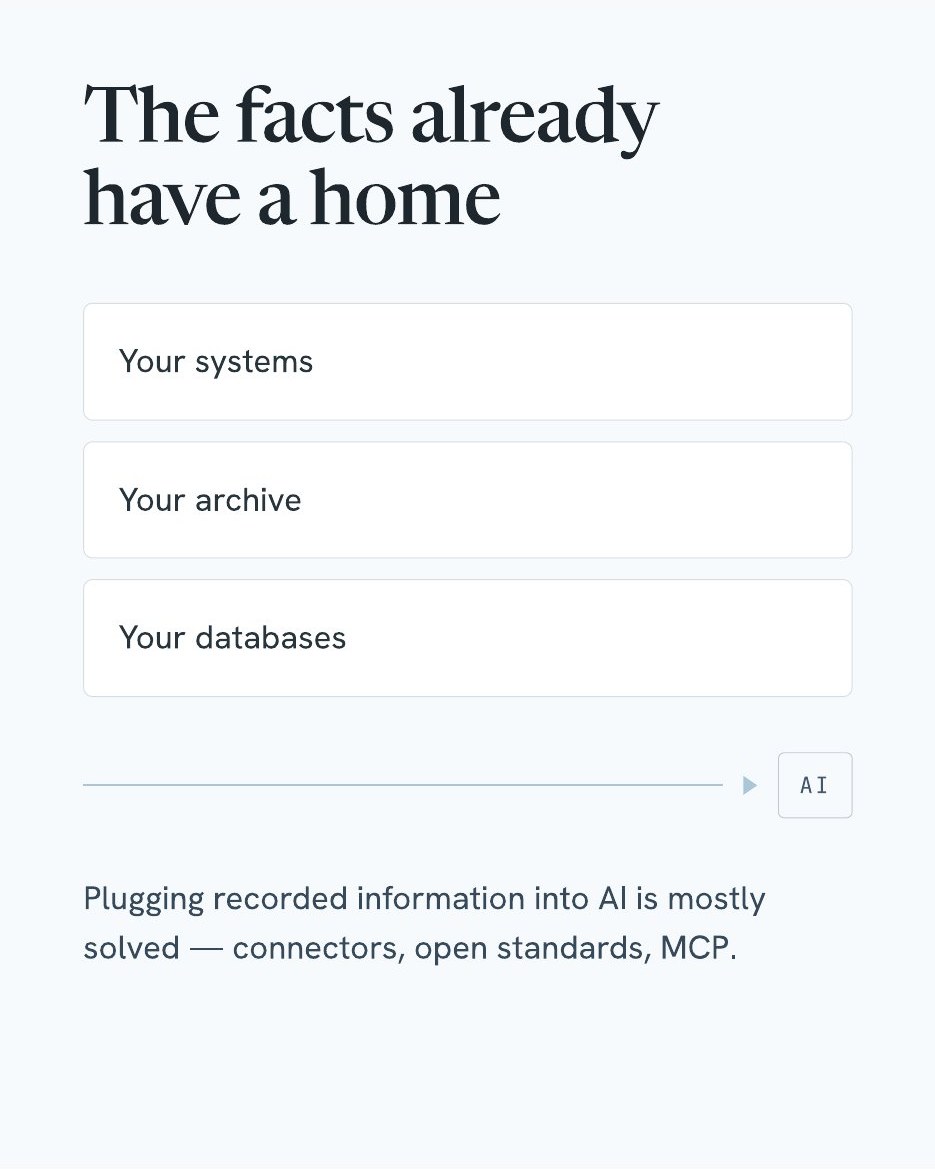
The facts have a home
The facts have an obvious home. Your systems, your archive, your databases. Plugging recorded information into AI is mostly solved today, with connectors and open standards like MCP.
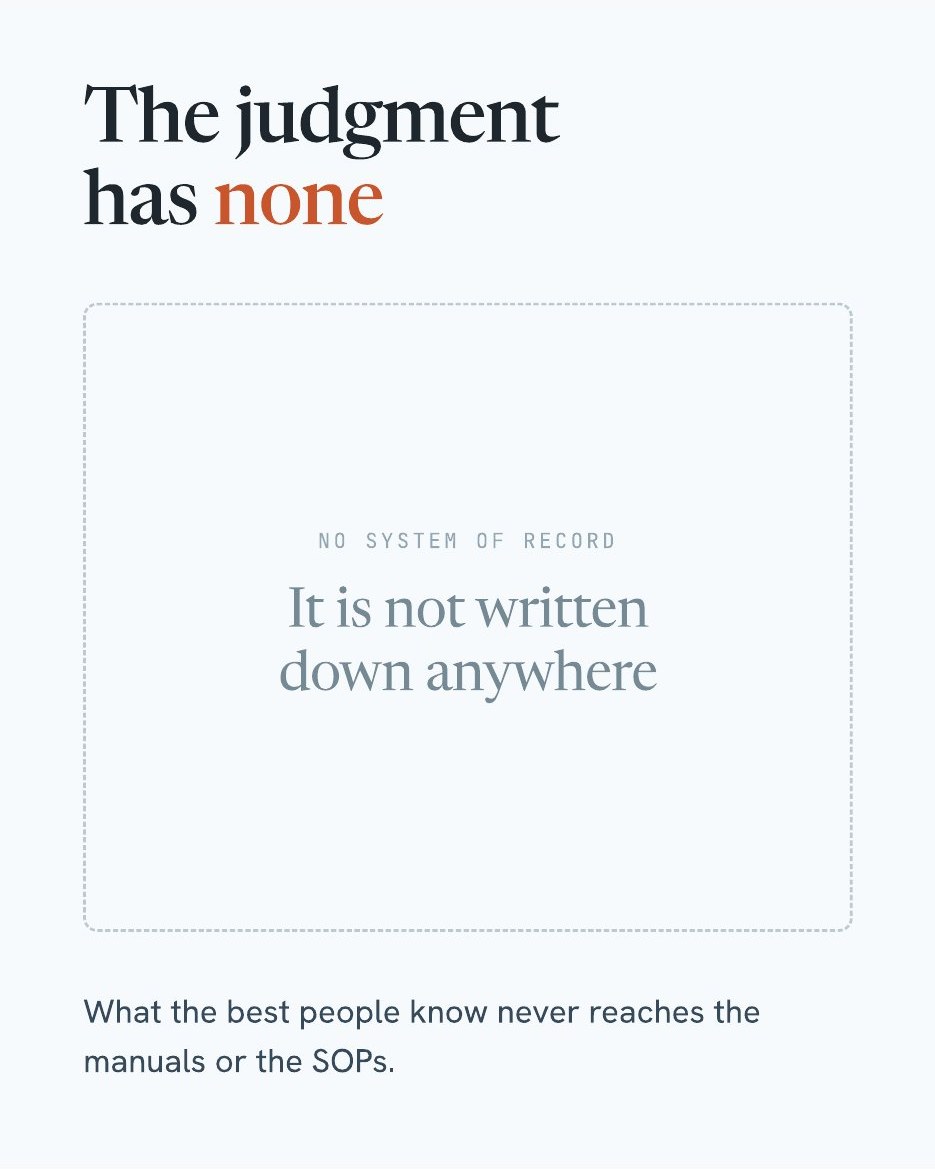
The judgment has no home
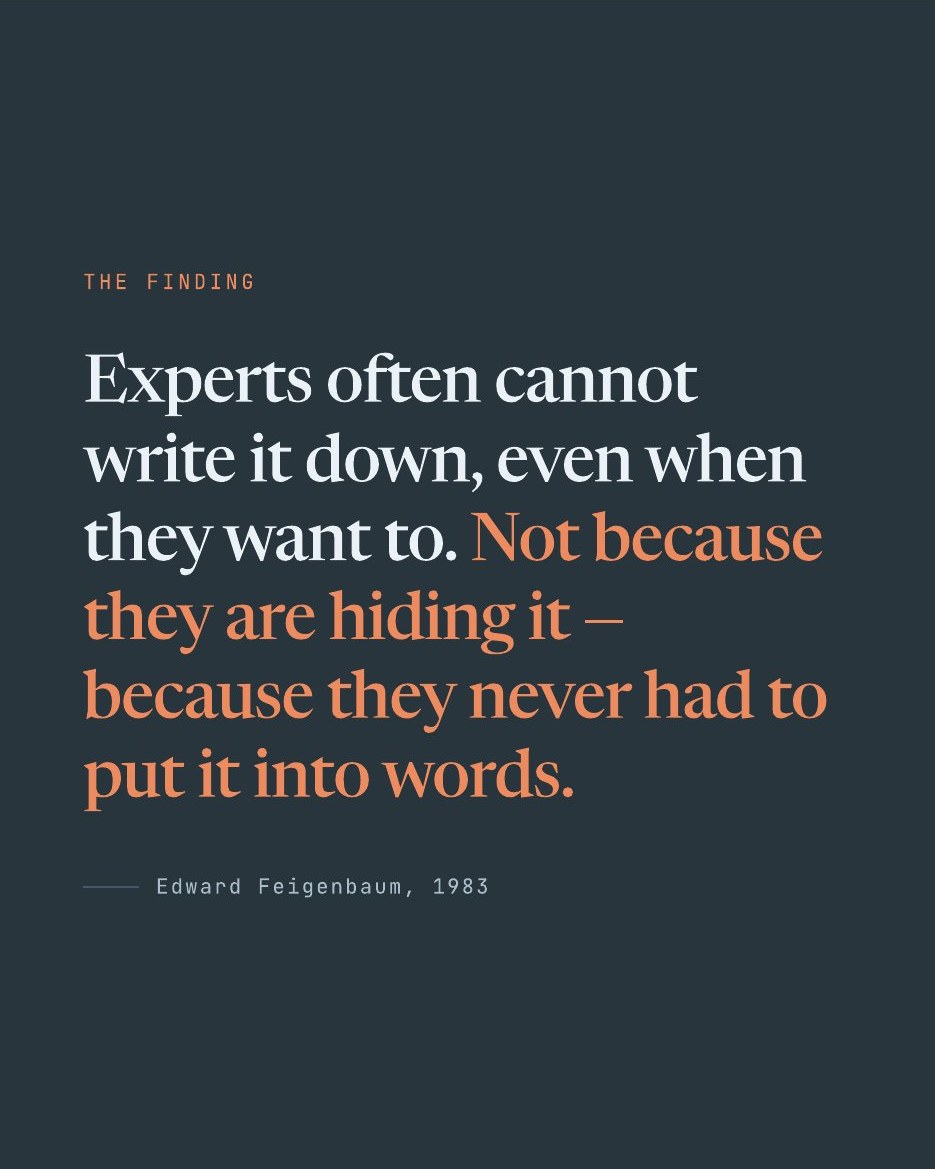
The judgment, or as the article calls it, the art of good guessing, has no home. It is not written down anywhere, and Feigenbaum's finding was that experts often cannot write it down even when they want to. Not because they are hiding it. Because they never had to put it into words. What the best people actually know never reaches the company manuals or the SOPs.
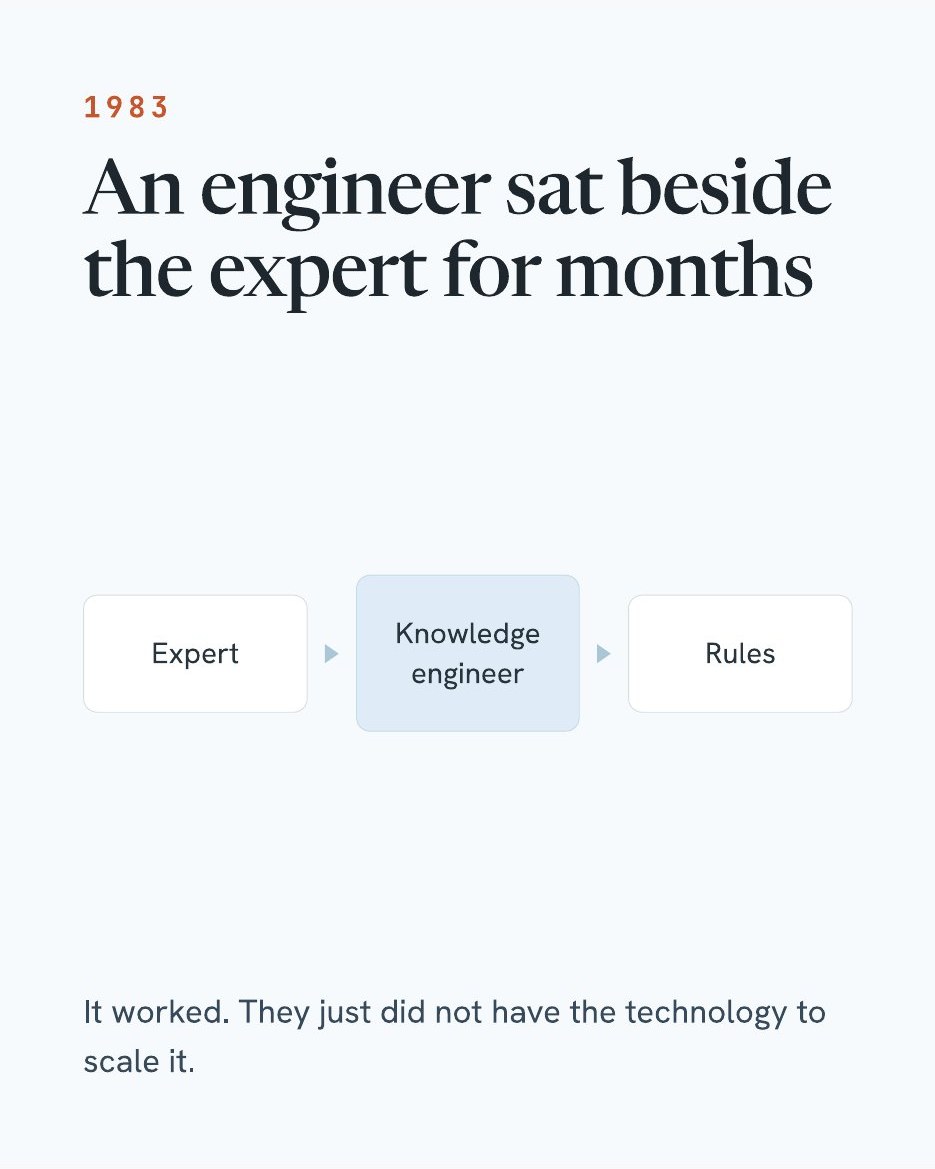
Forty years ago they solved this by placing an engineer next to the expert for months, creating rules. They did not have the technology to scale it. Now we do.
The translator disappeared
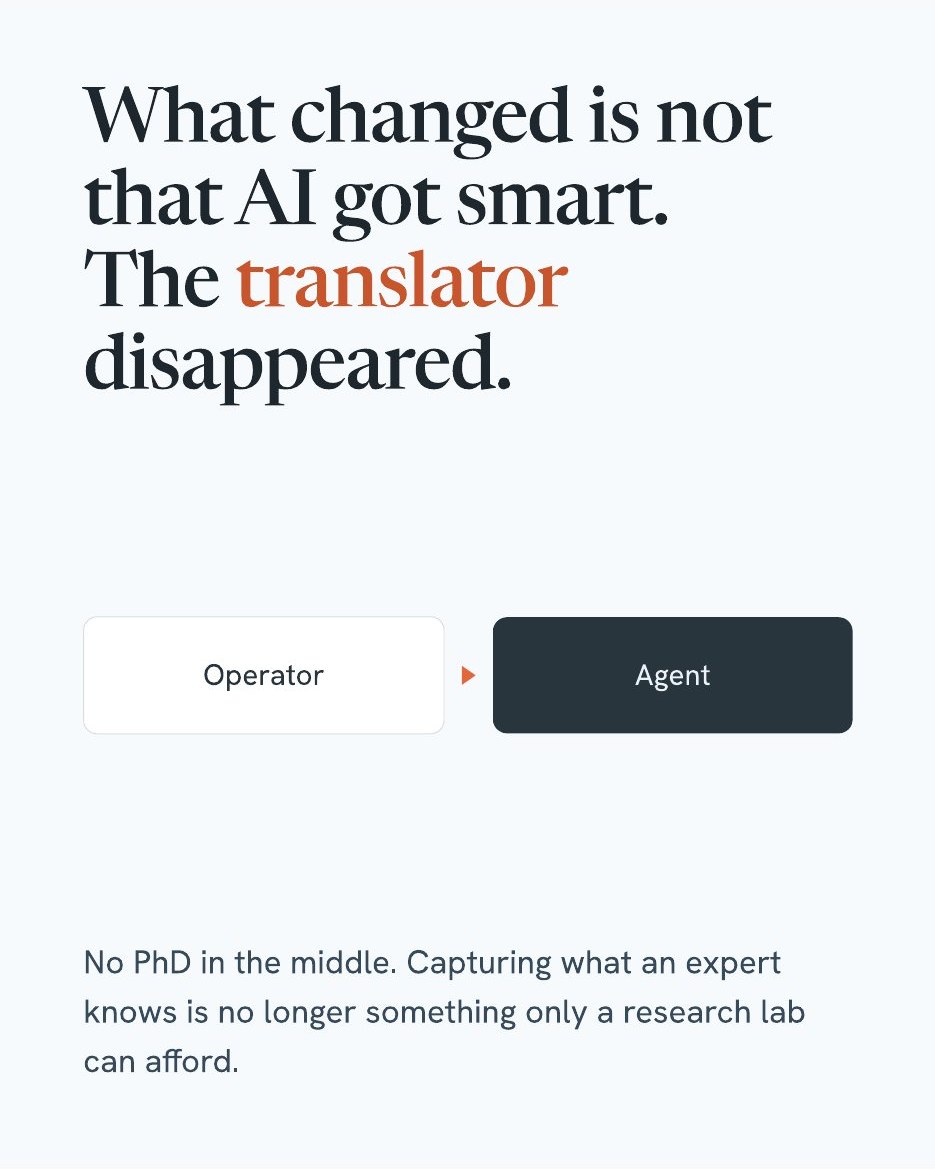
What changed is not that AI got smart. It is that the translator disappeared.
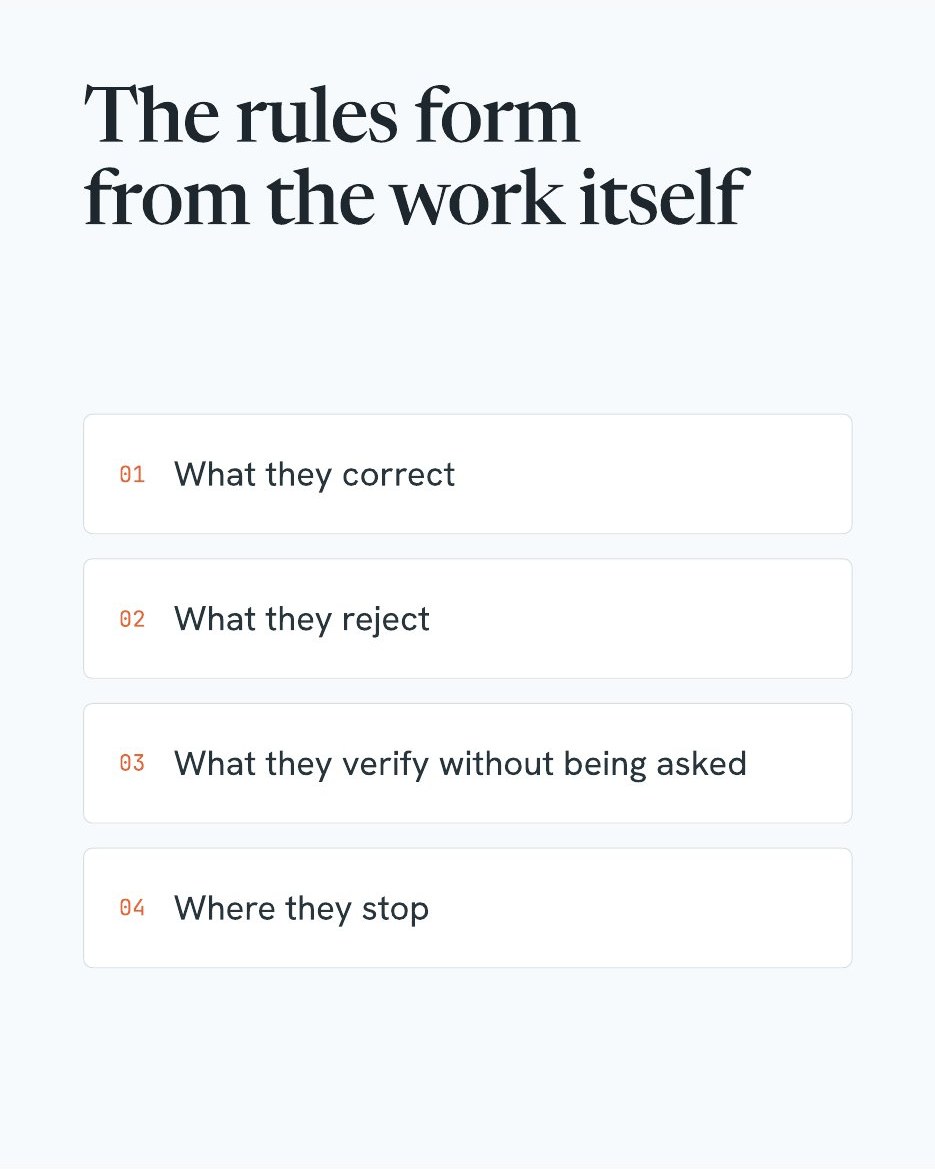
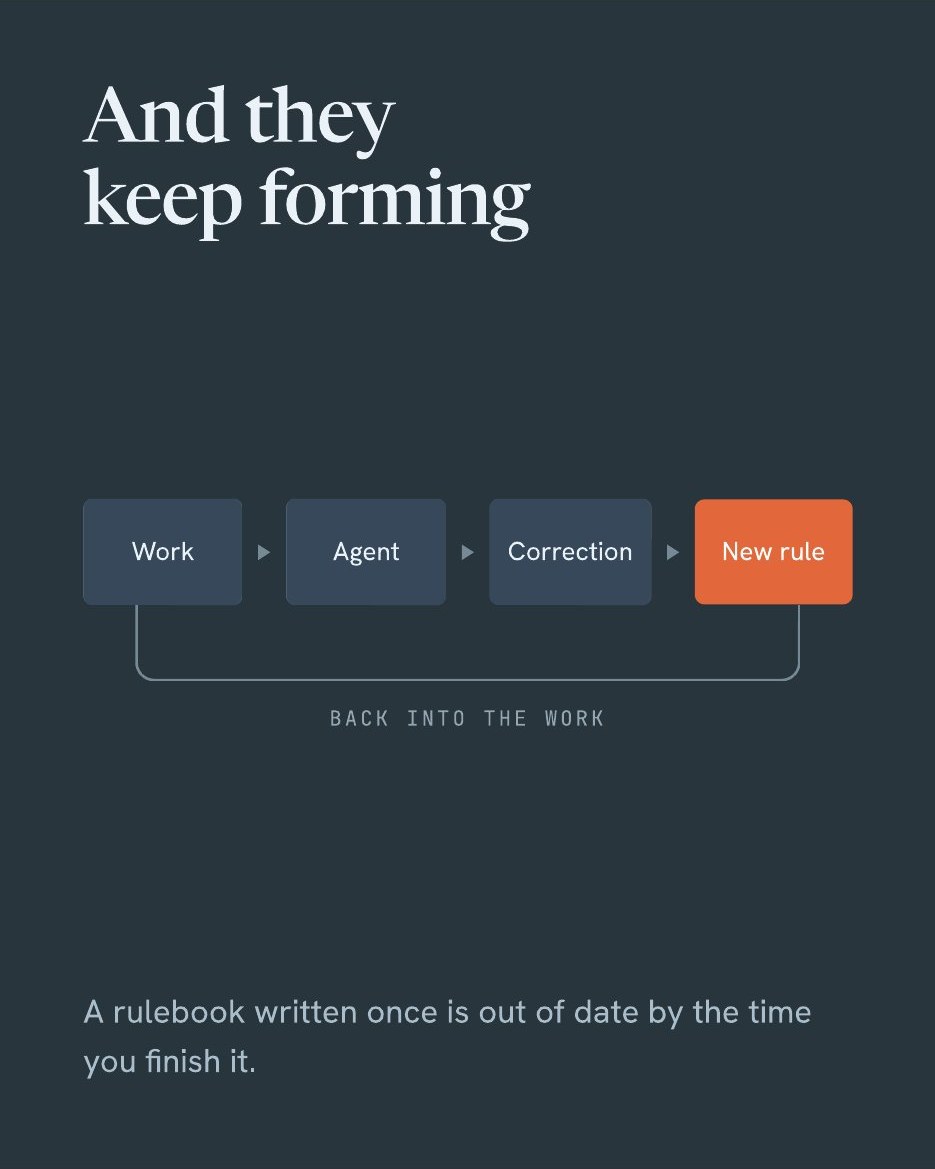
You can now put the agent directly next to the operator. No PhD required. That is the real unlock: capturing what an expert knows is no longer something only a research lab can afford. The rules form from the work itself: what they correct, what they reject, what they verify without being asked, where they stop.
And they keep forming. That matters more than the first capture, because what your experts know changes as their field changes. A rulebook written once is out of date by the time you finish it.
From shortcuts to assets
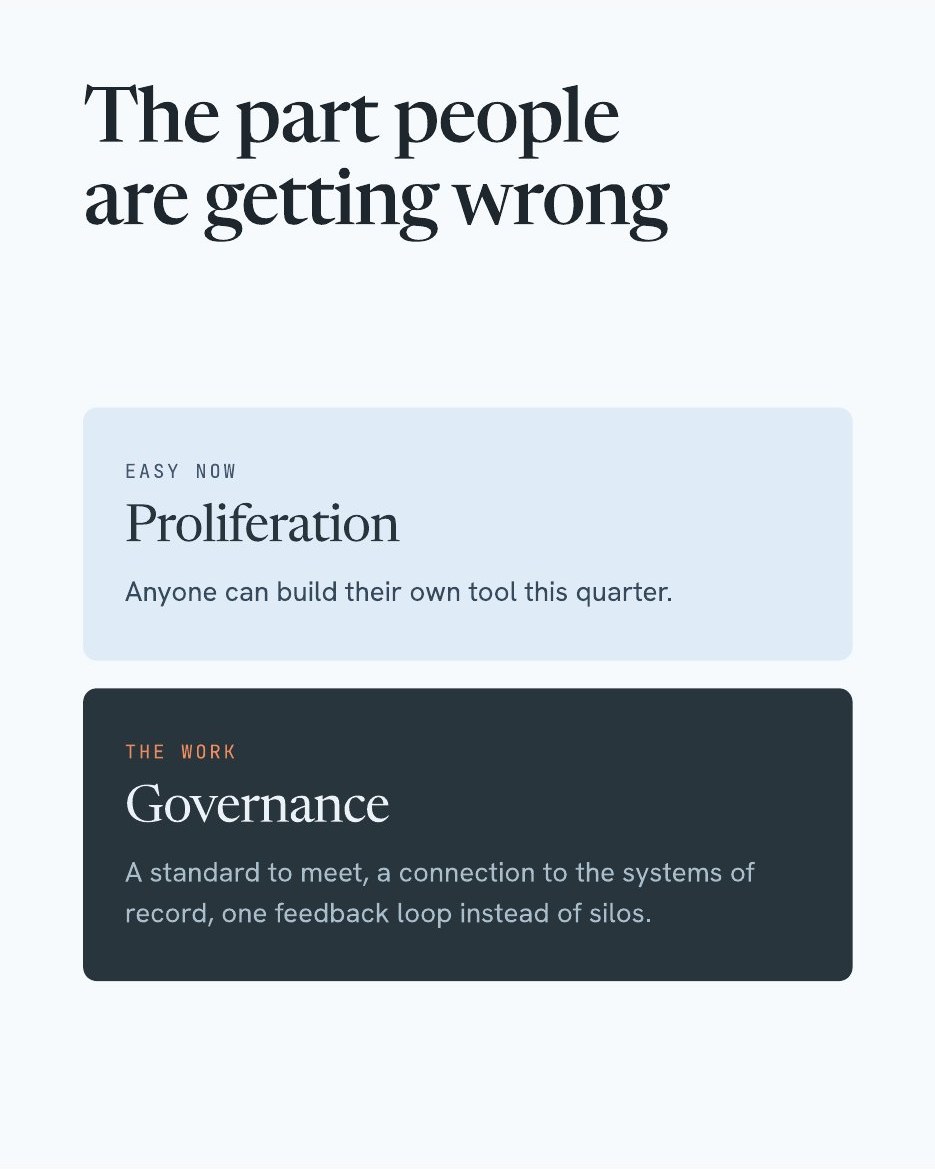
Back to the construction company. The tools multiplied fast. The biggest payoff comes later, when those tools are held to a standard, connected to the official inventory management system, and work together to create a feedback loop instead of sitting in silos. That is when vibe coding turns personal shortcuts into durable assets.
Which is the part people are getting wrong. The proliferation is easy now. The governance is the work.
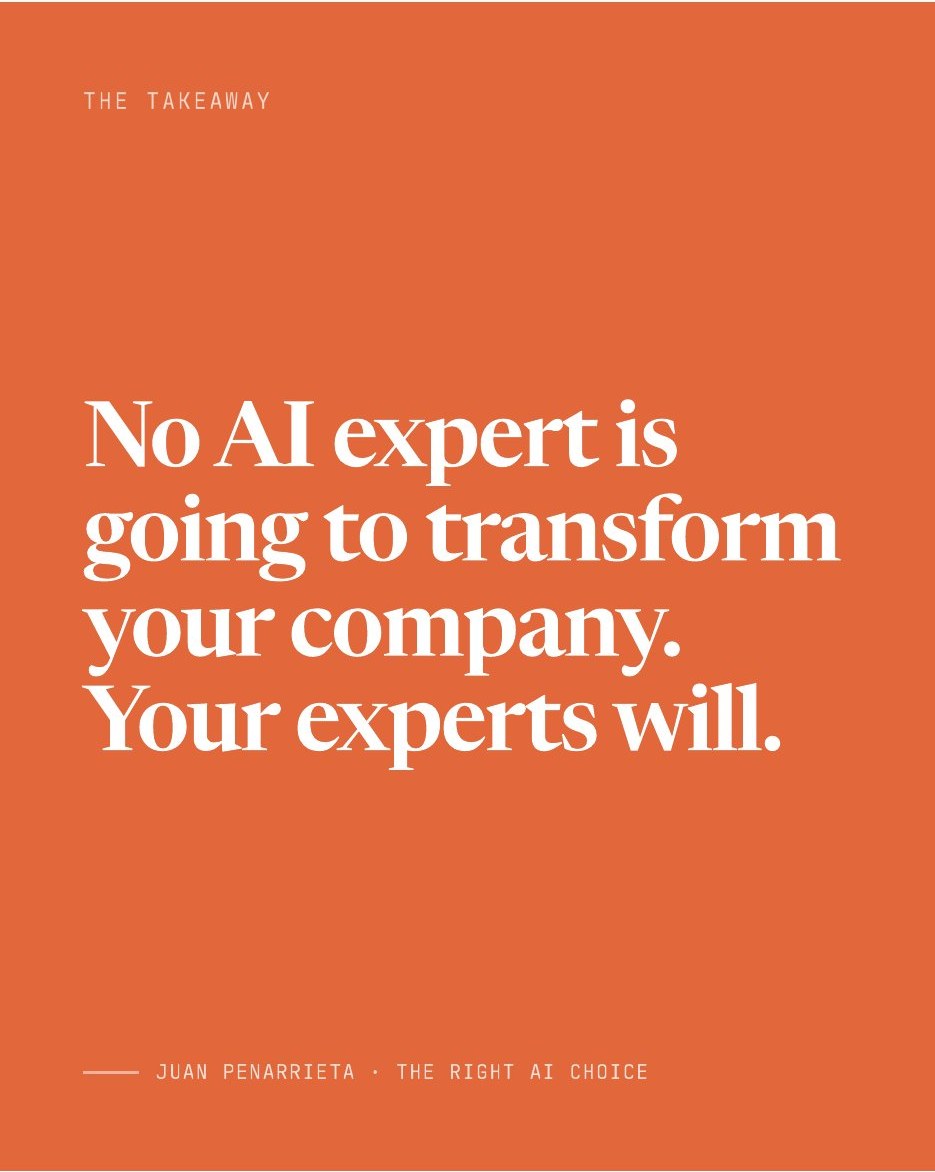
No AI expert is going to transform your company. Your experts will. Capturing what they know is still the hardest problem in this field. For the first time, anyone can do it.
- Edward Feigenbaum, "Knowledge Engineering: The Applied Side of Artificial Intelligence"